


Creators can sell digital products online by choosing one clear problem, packaging the solution into a simple offer, setting up a sales page, collecting payments, delivering the product or service, and building an email list for future sales.
Digital offers can include templates, guides, coaching calls, online courses, memberships, workshops, and paid communities. A creator-store platform like Flowlance can help simplify the setup by bringing products, bookings, memberships, lead magnets, email marketing, analytics, and payments into one place.
The Creator Economy Has Changed: Simple Offers Win
Many creators, freelancers, coaches, consultants, and educators already have something people will pay for: useful knowledge.
The hard part is not always the offer. It is the setup.
You might know how to teach photography, help people build better habits, coach small business owners, design templates, review resumes, write fitness plans, or explain a niche skill clearly. But the moment you try to turn that knowledge into a paid offer, the process can feel bigger than expected.
You start with one idea. Then you find yourself comparing website builders, course platforms, checkout tools, booking apps, email software, link-in-bio pages, automation tools, and payment processors.
That is where many people stop.
Not because the idea is weak, but because the tech stack becomes heavier than the business.
The good news is that selling your knowledge online does not need to begin with a huge website, a polished brand, or a complicated funnel. It can start with one useful offer, one clear audience, and one simple place where people can buy, book, or join.
What Can You Sell as a Digital Creator?
A digital offer is a paid solution delivered online. It does not have to be a full course or a large membership from day one.
You can start with:
- Templates and printables
- eBooks and PDF guides
- Notion dashboards
- Coaching calls
- Consulting packages
- Mini-courses
- Paid communities
- Memberships
- Presets, filters, or creative assets
- Live workshops or recorded trainings
The best offers are not broad. They solve a specific problem for a specific person.
“Grow online” is too vague.
“A 30-day content system for beginner fitness coaches” is much easier to understand and easier to sell.
Specific offers work better because buyers can quickly see who the offer is for, what problem it solves, and what result they can expect.
Start With the Problem, Not the Platform
Before choosing a tool, define the problem you solve.
Ask yourself:
- What do people already ask me for help with?
- What result have I achieved that others want?
- What process do I repeat often?
- What could I turn into a guide, template, course, session, or membership?
- What would save my audience time, money, stress, or confusion?
Once the problem is clear, the offer becomes easier to shape.
A photographer could sell Lightroom presets, a posing guide, or a paid editing workshop. A fitness coach could sell a workout plan, habit tracker, nutrition guide, or monthly accountability membership. A freelancer could sell client onboarding templates, proposal scripts, or a paid consulting session.
You do not need ten products.
You need one clear entry point.
A Simple Digital Offer Framework
A strong first offer usually has five parts.
- A clear promise: The buyer should know what outcome they are paying for.
- A defined format: Is it a PDF, video course, template pack, booking session, membership, or community?
- A simple checkout: The buyer should not need to message you manually, wait for bank details, or search through several links.
- Automatic delivery or a clear next step: If someone buys a PDF, they should receive it quickly. If they book a call, the calendar should handle the process.
- A follow-up system: Even a simple email sequence can help turn one-time buyers into repeat customers.
This is why many creators look for a lightweight creator-store setup instead of stitching together five different tools. Flowlance, for example, is built for creators who want to sell digital products, services, memberships, templates, coaching sessions, and other digital offers without needing a full website or advanced technical skills.
Why Simplicity Beats Perfection
A common mistake is trying to build the perfect digital business before making the first sale.
The logo gets redesigned. The website copy gets rewritten. The course outline keeps expanding. Weeks pass, sometimes months, and the offer still has not been tested.
A better approach is to launch a useful version quickly.
That could mean:
- Creating a short paid guide before writing a full eBook
- Selling a live workshop before recording a full course
- Offering a coaching package before building a membership
- Testing a template bundle before creating a large resource library
Your first version only needs to answer one question: will people pay for this result?
Once you know the answer, you can improve the offer using real feedback instead of guesses.
Where Flowlance Fits Into the Creator Setup
I’ve partnered with Flowlance because it gives creators a simpler way to sell digital products, services, courses, and memberships without overcomplicating the setup.
That does not mean every creator needs the same platform. The right tool depends on your offer, audience, budget, and workflow.
But if you want one place to publish offers, accept payments, manage bookings, collect leads, and organise your digital products, a creator-store platform can remove a lot of friction.
Flowlance includes features for digital products, lead magnets, coaching calls, email marketing, paid communities, memberships, calendar booking, analytics, CRM, upsells, Meta Pixel, Zapier integration, sales landing pages, and link-in-bio functionality.
That matters because most creators do not want five disconnected tools. They want one simple page where people can understand the offer, buy it, book it, or join it.
A Practical Example
Imagine you teach beginner freelancers how to find clients.
Instead of building a massive course immediately, you could create a simple offer ladder:
- Free lead magnet: “10 Client Outreach Scripts”
- Low-ticket product: “Freelancer Proposal Template Pack”
- Service: “1:1 Profile Review Session”
- Course: “Client Acquisition Starter System”
- Membership: “Monthly Freelancer Growth Club”
This gives your audience several ways to engage with you.
Someone who is not ready to buy can download the free resource. Someone who needs a quick solution can buy the template. Someone who wants personal help can book a session. Someone who wants deeper support can join the course or membership.
That is the power of a digital product ecosystem. You stop relying on one offer and start building a small business around your knowledge.
The Role of Content in Selling Digital Products
A digital offer rarely sells just because it exists.
People need context. They need trust. They need to understand why the offer matters.
That is where content helps.
Your content should answer the questions your future customers are already asking:
- How do I start?
- What should I avoid?
- What tools do I need?
- How much should I charge?
- What type of offer should I create first?
- How do I deliver the product?
- How do I get my first buyers?
The best content does not feel like a pitch. It teaches first.
This also works well for affiliate and SEO content. A useful article should help the reader understand the problem before recommending a tool. When the recommendation appears naturally, it feels like the next step rather than a forced promotion.
How to Choose Your First Digital Offer
Start with the smallest offer that solves a real problem.
A good first offer is usually:
- Easy for you to create
- Easy for the buyer to understand
- Specific to one audience
- Connected to a real pain point
- Simple to deliver
- Valuable enough to charge for
Instead of creating “The Complete Business Course,” you could create “The 7-Day Offer Setup Kit for New Coaches.”
Instead of “Social Media Templates,” you could create “30 Instagram Story Templates for Yoga Teachers.”
Instead of selling general “Productivity Coaching,” you could offer “A 60-Minute Notion Workspace Setup Session.”
Specificity makes the offer easier to explain, easier to market, and easier to buy.
When You Are Ready to Launch
At some point, planning has to become publishing.
You can validate your first offer by sharing it with your existing audience, adding it to your link-in-bio, mentioning it in relevant content, sending it to your email list, or offering it to people who have already asked for help.
You do not need a huge following. You need a clear promise and a simple way for people to take action.
Top Creator Tips
Sell digital products online without overcomplicating the tech. If you have knowledge, templates, guides, courses, services, or a membership idea, you do not need a huge website or a messy tech stack to start selling. You need one clear offer, one simple sales page, a way to collect payments, and a smooth delivery process.
Flowlance helps creators bring that setup into one place, so you can launch faster and focus on the offer instead of the tools, from your website or Bio.
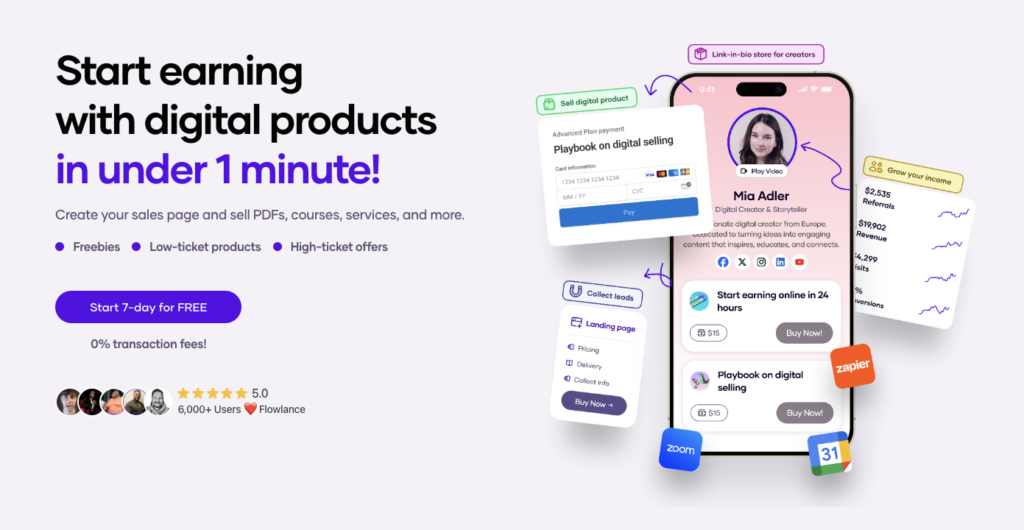
Sell Digital Products Online With Flowlance:
The button includes my affiliate link. If you sign up through it, I may earn a commission at no extra cost to you. That support helps me keep writing useful guides, testing creator tools, and sharing practical tips that save you time.
Final Thoughts
The easiest way to start selling online is not to build a complicated business overnight.
It is to take what you already know, package it into something useful, and give people a simple way to buy it.
Start with one audience. Solve one problem. Create one offer. Publish it. Learn from real buyers. Improve from there.
Whether your first product is a template, guide, coaching session, mini-course, or membership, the goal is the same: make your knowledge easier to access, easier to buy, and easier to benefit from.
That is how a simple idea becomes a digital offer.
Over time, that offer can become the foundation of a real creator business.